Practical knowledge that you can access at any time, without having to leave your home.
Don’t wait – buy now and start using the power that nature gives us.
Ph.D., lecturer at the State Academy of Applied Sciences in Krosno
Title: “CHEMOTAXONOMY OF SELECTED MEDICINAL PLANTS OF BULGARIA IN THE SYSTEM OF ALEXANDER ALFONSOVICH GROSSHEIM. SAFETY ASPECTS OF THE USE OF SELECTED HERBS OF BULGARIAN FLORA” – Part I
- Number of pages: 120
- Binding: Hardcover
Polish
- Reviewers: Prof. Igor Britchenko, Doctor of Sciences
- Prof. Janusz Kilar, Doctor of Sciences
- Prof. Maksym Bezpartochnyi, Doctor of Economics
- Editor: Olga Emilova Zlatanova
- Corrector: Kameliya Koleva Aleksieva
- Prepress: Kameliya Koleva Aleksieva
- Cover: Kameliya Koleva Aleksieva
Publisher: ANIS Academic publishing house, Plovdiv, Bulgaria
Academic Publishing House • Digital printing • Advertising studio
e-mail: pechatnica@anis.bg; tel.: +359 884 557 841; +359 882 392 740
Plovdiv, Bulgaria, 2026
ISBN (Print) 978-619-7774-35-1
ISBN (Online) 978-619-7774-36-8
ABOUT THE AUTHOR
TABLE OF CONTENTS
From the Author ………………………………………………………………… 7
Introduction ……………………………………………………………………. 10
Section: Pteridospermae – ferns ……………………………. 26
Class: Filicales ………………………………………………………… 31
Family: Polypodiaceae ……………………………………………. 31
Class: Equisetales ……………………………………………………. 38
Family: Equisetaceae ……………………………………………… 38
Class: Lycopodiales ………………………………………………….. 43
Family: Lyopodiaceae ……………………………………………… 43
Section: Gymnospermae – gymnosperms ………………………. 46
Order: Taxales ………………………………………………………….. 56
Family: Taxaceae ……………………………………………………. 56
Order: Pinales ………………………………………………………….. 59
Family: Pinaceae ……………………………………………………. 59
Order: Cupressales …………………………………………………… 64
Family: Cupressaceae …………………………………………….. 64
Section: Angiospermae ………………………………………………. 74
Division I: Batrachiophyta ……………………………………………….. 74
Division II: Hamamelidophyta ………………………………………….. 86
6
Order: Hamamelidales – witch-hazels …………………………. 86
Family: Platanaceae – plane trees ……………………….. 86
Family: Hamamelidaceae – witch-hazel family …………………. 86
Division III: Melophyta ……………………………………………………. 91
Branch: Rosalia ……………………………………………………… 91
Order: Rosales – roses ……………………………………….. 91
Family: Crassulaceae – stonecrops ……………………. 91
Family: Rosaceae – rose family ……………………………….. 91
Family: Saxifragaceae – saxifrages …………………….. 91
Family: Pittosporaceae – pittosporums ……………….. 91
Division III: Melophyta ………………………………………………….. 115
Branch: Leguminosalia ………………………………………….. 115
Order: Leguminosales – legumes …………………………. 115
Family: Leguminosae – legumes, papilionaceous (Papilionaceae) ……………….. 115
Bibliography …………………………………………………………… 126
FROM THE AUTHOR
The vascular flora of Bulgaria (flowering plants, ferns, gymnosperms) comprises approximately 4060–4100 native species and subspecies. According to Ana Petrova and Vladimir Vladimirov, the flora of Bulgaria currently includes 4064 species, belonging to 921 genera and 159 families. These numbers reflect the dynamic nature of floristic research, including new discoveries and taxonomic revisions. For comparison, the vascular flora of Poland includes approx. 2350–2400 native species, which highlights the exceptional biodiversity of Bulgaria – estimated at 8–10% of the European vascular flora.
The flora of Bulgaria constitutes one of the richest natural treasures of Southeastern Europe, being a testament to the complex geological, climatic, and biogeographical history of the Balkan Peninsula. The country’s location at the intersection of temperate continental and subtropical Mediterranean zones, combined with an extreme diversity of terrain – from Black Sea lowlands to high mountain ranges such as Pirin (alt. 2914 m a.s.l.) and the Rhodopes – favors the occurrence of unique plant communities.
Intensive phytochemical and biochemical research in the 19th and 20th centuries laid the foundations for the development of chemotaxonomy.
Dimcho Zahariev systematized and compiled information on raw materials and the number of medicinal plant species used in Bulgaria. It turned out that 845 plant species were used in Bulgarian medicine.
Chemotaxonomy is a subdiscipline of systematics concerned with distinguishing taxonomic units, determining the degree of relatedness between taxa, and constructing taxonomic systems using chemical criteria.
When classifying individual taxa, characteristic (specific to a given taxon) secondary metabolites are taken into account.
Related taxa possess similar secondary metabolites and metabolic pathways.
Knowledge of chemotaxonomy makes it possible to predict the occurrence of certain key substances in related lower taxonomic units (subspecies, species, genus), even if they have not been analyzed separately (directly), which is particularly important for toxicology and pharmacology.
Chemotaxonomy is especially valuable in the study of plant evolution (specialization) and relationships. The first chemotaxonomic system of plants was developed in the 1960s by the Swiss pharmacist Robert Hegnauer (1919–2007).
Therefore, chemotaxonomy constitutes an invaluable tool in scientific and clinical practice, helping to identify plants with potential medicinal properties and to assess their safety of use. It also enables a better understanding of the evolution and adaptation of species in changing environmental conditions, which is fundamental for biodiversity conservation and the rational use of plant resources.
A phytotherapist, a phytomedicine physician, a pharmacist, or a pharmacologist – without knowledge of chemotaxonomy – will permanently go astray and will never fully understand or recognize the medicinal properties of plants.
I began research on the medicinal plants of Bulgaria in 2005. Based on my own phytosociological and analytical studies, as well as a literature review, I have been developing for nearly 20 years a comprehensive publication on the medicinal properties, toxicology, and applications of medicinal plants occurring in Bulgaria.
In this monograph, selected native medicinal plants of Bulgaria are presented within the interesting taxonomic system of Alexander Alfonsovich Grossheim (1888–1948), taking into account chemotaxonomic features and aspects of herbal safety.
I would like to express my sincere thanks to Prof. Dr. Igor Britchenko (Игор Геннадийович Бритченко) and to Dr. Eng. Janusz Kilar for their critical remarks on this work and for encouraging me to prepare it.
I also thank the authorities of the Academy of National and Information Security in Plovdiv (Академия по национална и информационна сигурност – АНИС) for their interest in this monograph and assistance in its publication.
Henryk Różański
Krosno, December 8, 2025
RECIPIENT
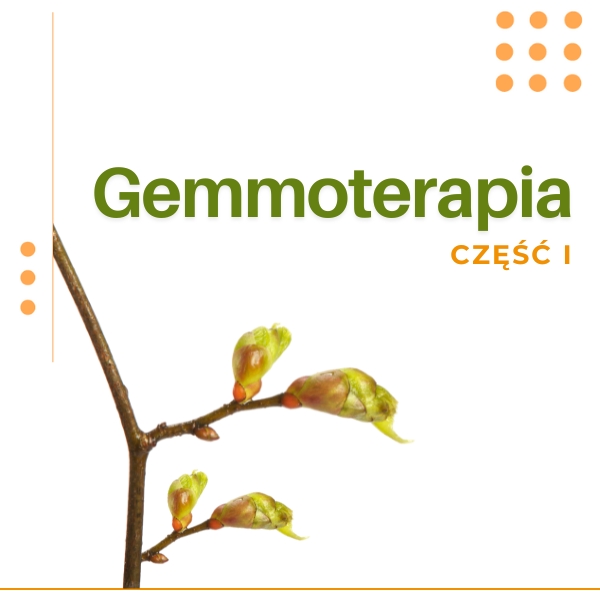
GEMMOTERAPIA
NAGRANIA WYKŁADÓW ONLINE
Odkryj niezwykłą moc gemmoterapii i wykorzystaj skondensowaną siłę natury dla swojego zdrowia.
Pączki roślin to naturalne bogactwo witamin, enzymów i substancji bioaktywnych – naucz się, jak skutecznie je stosować dzięki wykładom online prowadzonym przez dr. n. biol. Henryka Różańskiego.
Informujemy, że nagrania wykładów na dzień dzisiejszy nie są kompatybilne z produktami Apple. Prosimy o korzystanie z innego sprzętu lub systemu operacyjnego w celu uzyskania dostępu do materiałów. Dziękujemy za wyrozumiałość.
WYKŁADY PROWADZI: dr n. biol. Henryk Różański
CENA REGULARNA: 160,00 zł brutto
FORMA SZKOLENIA: NAGRANIE WYKŁADU ONLINE
CZAS WYKŁADU: 1.40 h
PROGRAM:
1. GRZYBY LECZNICZE W DAWNEJ MEDYCYNIE
2. GRZYBY W FARMAKOPEACH EUROPEJSKICH
3. GRZYBY WG DRA G. DRAGENDORFFA M.IN.:
– GŁOWINA KUKURYDZY,
– TRUFLE,
– PACHYMA COCOS,
– BUŁAWINKA CZERWONA,
– MACZUŻNIK CHIŃSKI,
– USZAK BZOWY,
– PNIAREK LEKARSKI,
– WROŚLAK ANYŻOWY,
– ŻAGIEW KORZENIOWA,
– SZYSZKÓWKA ŚWIERKOWA,
– MUCHOMOR CZERWONY,
– MLECZAJ BIAŁY,
– CZASZNICA OLBRZYMIA,
– SROMOTNIK SMRODLIWY
160,00 zł
MYCOTHERAPY
ONLINE LECTURE RECORDINGS
Discover the extraordinary properties of mushrooms with the Dr. Różański Academy, which have fascinated scientists for centuries and support health on many levels.
Discover the therapeutic effects of mushrooms, which can help fight various ailments, support the body’s natural regeneration processes, and strengthen the immune system.
Please note that lecture recordings are currently not compatible with Apple products. Please use a different hardware or operating system to access the materials. Thank you for your understanding.
LECTURES BY:
PhD. Henryk Różański & PhD. Dominik Wróbel
CENA REGULARNA: 160,00 zł brutto
FORMA SZKOLENIA: NAGRANIE WYKŁADU ONLINE
CZAS WYKŁADU: 1.40 h
PROGRAM:
1. GRZYBY LECZNICZE W DAWNEJ MEDYCYNIE
2. GRZYBY W FARMAKOPEACH EUROPEJSKICH
3. GRZYBY WG DRA G. DRAGENDORFFA M.IN.:
– GŁOWINA KUKURYDZY,
– TRUFLE,
– PACHYMA COCOS,
– BUŁAWINKA CZERWONA,
– MACZUŻNIK CHIŃSKI,
– USZAK BZOWY,
– PNIAREK LEKARSKI,
– WROŚLAK ANYŻOWY,
– ŻAGIEW KORZENIOWA,
– SZYSZKÓWKA ŚWIERKOWA,
– MUCHOMOR CZERWONY,
– MLECZAJ BIAŁY,
– CZASZNICA OLBRZYMIA,
– SROMOTNIK SMRODLIWY
160,00 zł
FLOROTHERAPY
ONLINE LECTURE RECORDINGS
Let florotherapy bring more harmony, lightness, and health to your life.
Subtle flower essences help calm the mind, strengthen emotional resilience, and support the body’s inner harmony. Discover how to use their unique properties with inspiring online lectures led by Dr. Henryk Różański.
Please note that lecture recordings are not currently compatible with Apple products. Please use a different device or operating system to access the materials. Thank you for your understanding.
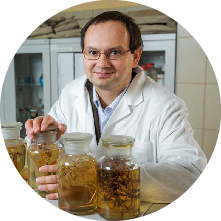
LECTURES BY: Henryk Różański, PhD, Biology
CENA REGULARNA: 160,00 zł brutto
FORMA SZKOLENIA: NAGRANIE WYKŁADU ONLINE
CZAS WYKŁADU: 1.40 h
PROGRAM:
1. GRZYBY LECZNICZE W DAWNEJ MEDYCYNIE
2. GRZYBY W FARMAKOPEACH EUROPEJSKICH
3. GRZYBY WG DRA G. DRAGENDORFFA M.IN.:
– GŁOWINA KUKURYDZY,
– TRUFLE,
– PACHYMA COCOS,
– BUŁAWINKA CZERWONA,
– MACZUŻNIK CHIŃSKI,
– USZAK BZOWY,
– PNIAREK LEKARSKI,
– WROŚLAK ANYŻOWY,
– ŻAGIEW KORZENIOWA,
– SZYSZKÓWKA ŚWIERKOWA,
– MUCHOMOR CZERWONY,
– MLECZAJ BIAŁY,
– CZASZNICA OLBRZYMIA,
– SROMOTNIK SMRODLIWY
160,00 zł